









The Black Agenda Ghana
Accra, Ghana
May 14, 2026
1,535 Supporters and Counting: Thank You to the Founding 1,500
To the Founding 1,500 and everyone who has joined since:
Thank you.
You have not just signed a petition. You have helped turn a concern into a movement. You have helped carry the demand for reparative citizenship past another major milestone. Because of your signatures, shares, comments, messages, group posts, calls, and conversations, this issue has become harder and harder to ignore. Now, with 2,500 in sight, we need to keep building.
The petition has now passed 1,500 verified signatures and reached 1,535 supporters. We are already moving toward the next Change.org goal of 2,500 supporters.
The Numbers That Matter
- 1,535 verified supporters
- More than 10 times the number of people who received citizenship in the most recent ceremony
- 4,189 petition views
- 854 petition shares
- Petition strength score: 10: Great
- Next goal: 2,500 supporters
- Only 965 signatures left to reach the next goal
Roughly 150 people received citizenship in the most recent ceremony, but more than 1,500 people have now signed The Black Agenda petition. That tells us something important: the issue is not lack of interest. The issue is access, structure, fairness, and representation.
Those numbers matter. But the deeper story is still the people behind them.
Every signature is a public stand for repair.
Every share moves the issue into another household, organization, group, and community.
Every comment adds another living voice to the demand.
Every supporter helps turn reparative citizenship from a private concern into a public movement.
The process must match the promise.
Top Ghanaian Scholars and a Cape Coast Traditional Ruler Are Championing This Cause
This petition is not isolated. It is not a fringe concern. It is not a narrow grievance. It is a serious proposal for structural alignment between Ghana’s reparative justice commitments and Ghana’s domestic citizenship process.
The same core principles behind this petition have been championed publicly by leading Ghanaian scholars, public intellectuals, and a Cape Coast traditional ruler through The Black Agenda Town Hall on Citizenship and the forthcoming scholarly article that grew from it: “From UN Resolution to Repatriation: Historic Diasporan Citizenship and Reparative Justice in Ghana.”
The forthcoming article is authored by Ɔbenfo Ọbádélé Bakari Kambon, Prof. Nene Lomotey-Kuditchar, Nana Kwaku Agyemang Prempeh, Prof. Adokarley Benedicta Lomotey, Dr. Nana Yaw Mireku Yeboah, and Kweku Darko Ankrah. It developed from the April 10, 2026 town hall at the Institute of African Studies, University of Ghana.
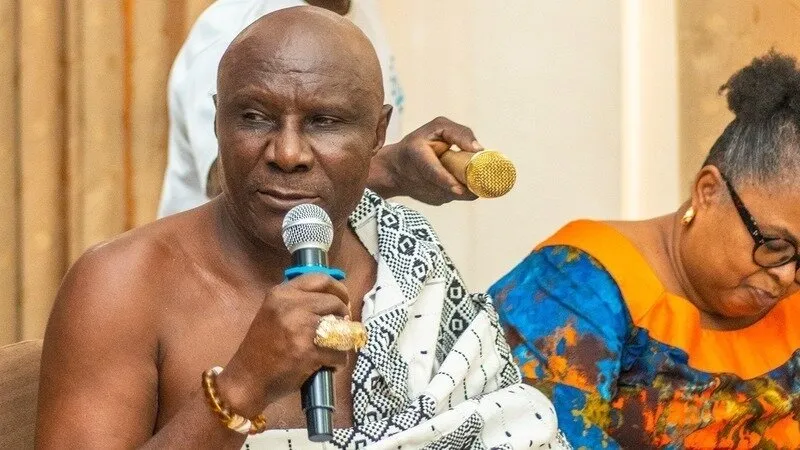
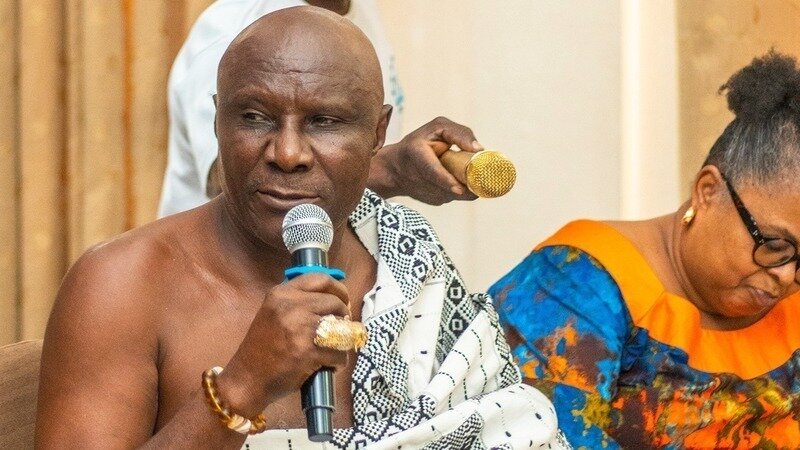
The voices include university scholars, policy thinkers, and Nana Kweku Egyir Gyepi III, Senior Commissioner King of Cape Coast, whose intervention connected the petition directly to the history of Cape Coast Castle and the forced removal of our Ancestors.
That matters because the petition’s demands are not coming from nowhere. They are grounded in public discussion, scholarly analysis, Ghanaian intellectual leadership, traditional authority, and indigenous frameworks of welcome, repair, and belonging.
Ghanaian Scholars and Traditional Voices in Their Own Words
1. Prof. Nene Lomotey-Kuditchar: “It should not be a matter of being an exception, but it should be the rule.”
At the town hall, Prof. Nene Lomotey-Kuditchar connected reparative citizenship to Ghana’s founding Pan-Afrikan mission and the unfinished work of liberation. He stated:
“The time has come for them to also be liberated. And liberation means going back to where you came from, where you belong.”
He then made the policy principle clear:
“It should not be a matter of being an exception, but it should be the rule.”
That is exactly why reparative citizenship cannot be occasional, ceremonial, unpredictable, or reserved only for those who can survive sudden deadlines and prohibitive costs.
2. Prof. Nene Lomotey-Kuditchar: “The process of healing a people who have been harmed by the negative forces of history.”
Prof. Nene Lomotey-Kuditchar also framed reparative citizenship as part of healing historical rupture:
“It should be what has to be done to complete the process of healing a people who have been harmed by the negative forces of history.”
This is the deeper moral basis of the petition. Reparative citizenship is not ordinary immigration. It is part of healing a people whose connection to land, kinship, citizenship, and belonging was violently broken.
3. Prof. Adokarley Benedicta Lomotey: “Possible, not difficult, not complicated.”
Prof. Adokarley Benedicta Lomotey stated that reparative justice and Pan-Afrikan solidarity require a process that makes return possible:
“Historical justice, especially reparative justice and African solidarity, requires that we put in place measures that makes it possible, not difficult, not complicated.”
That directly supports the petition’s call for a fair, transparent, accessible, and permanent pathway to reparative citizenship.
4. Prof. Adokarley Benedicta Lomotey: “Welcoming our people back home where they belong.”
Prof. Adokarley Benedicta Lomotey also warned against treating Historic Diasporans as outsiders:
“Not make it seem as if these are outsiders who are coming home, but rather a way of welcoming our people back home where they belong.”
That is the core issue. If Ghana is welcoming the Historic Diaspora home, the process must be grounded in belonging, not exclusion.
5. Kweku Darko Ankrah: “There’s a practical need for the country to actually actualize what they’ve pushed at international front.”
Kweku Darko Ankrah placed the issue in legal and historical context. He noted that if Ghana has moved at the United Nations level to advance reparative justice, then Ghana must make that commitment real at home:
“If people want to come back home and our government has actually moved forward by going to the UN and ensuring such a resolution has been passed, then there’s a practical need for the country to actually actualize what they’ve pushed at international front.”
That is the heart of the matter.
Ghana cannot speak powerfully on reparative justice internationally while Historic Diasporans face prohibitive fees, unclear timelines, DNA barriers, lack of representation, and uncertain procedures in Ghana itself.
6. Kweku Darko Ankrah: “Why DNA?”
On the DNA issue, Kweku Darko Ankrah asked the question many people are asking:
“Why DNA?”
He then made the deeper point:
“As long as the person is Black, you’re an African.”
And he challenged why a person should need DNA to justify:
“his own nature, his own belongingness, his own personhood.”
That directly supports the petition’s call to permanently remove DNA as an exclusionary barrier.
DNA may be useful for optional personal genealogy. It should not become the gatekeeper of reparative citizenship, especially when enslavement, forced migration, colonial borders, family separation, and record destruction are the very harms being repaired.
7. Dr. Nana Yaw Mireku Yeboah: “We need to move away from symbols and think about systems and structures.”
Dr. Nana Yaw Mireku Yeboah stated one of the clearest principles of the entire town hall:
“We need to move away from symbols and think about systems and structures.”
He also said:
“Symbolism does not reflect or translate into access.”
That is exactly what this petition is asking for.
Symbolic welcome is not enough.
Ceremonies are not enough.
Slogans are not enough.
Symbolic language such as calling the Historic Diaspora Ghana’s “17th Region” is not enough unless it comes with real representation, access, and policy power.
Reparative citizenship requires systems and structures: representation, appeals, year-round access, clear timelines, fair procedures, post-arrival support, and real policy power.
8. Nana Kweku Egyir Gyepi III: “There was no fees. No DNA test.”
Speaking during the Q&A, Nana Kweku Egyir Gyepi III, Senior Commissioner King of Cape Coast, connected the issue directly to the history of Cape Coast Castle and the forced removal of Black people through the dungeons and ships.
He stated:
“I welcome all African diasporans who are yearning to return back to their root or motherland.”
He then made the principle unmistakably clear:
“We didn’t have to charge any fees because when they were kidnapped, stolen onto the dungeons and to the ships, there was no fees. Getting on the ship, there was no fees. No DNA test.”
He added:
“Now that they have found their way back to the motherland, our government should consider them returning home without fees.”
And on the GHS 25,000 fee, he said:
“That needs to be scrapped.”
This is a powerful traditional voice affirming the same position as the petition: reparative citizenship should not be blocked by fees or DNA barriers. Coming from a traditional ruler of Cape Coast, this statement carries deep moral weight because Cape Coast is one of the places most closely associated with the violence that created the Historic Diaspora.
Nana Kwaku Agyemang Prempeh’s Akan hospitality framework strengthens the same point.
The forthcoming article also draws on Nana Kwaku Agyemang Prempeh’s Akan hospitality framework to evaluate how Ghana receives the Historic Diaspora. The article states:
“Akan hospitality asks how a people receive their own.”
It also asks whether the state receives Historic Diasporans as:
“kin, clients, strangers, tourists, investors, or applicants.”
That question goes to the center of the petition.
A reparative citizenship process should reflect indigenous principles of welcome, recognition, listening, refreshment after the journey, and incorporation into the communal body. It should not begin from suspicion, extraction, and exclusion.
This Is Why the Petition Matters
Ghanaian scholars and traditional voices are naming the same contradiction that this petition names:
Ghana speaks internationally about reparative justice.
Ghana invokes return, belonging, and Pan-Afrikan solidarity.
Ghana calls the Historic Diaspora part of the national family.
Now the process must match that promise.
This petition continues to call for real reform, including:
- Reviewing and suspending the prohibitive GHS 25,000 citizenship application fee, amounting to thousands of dollars per person
- Permanently removing DNA as an exclusionary barrier
- Ensuring real, constituency-mandated representation for the Historic Diaspora
- Establishing a clear, year-round pathway to reparative citizenship
- Requiring at least 90 days’ notice for major changes in fees, requirements, vetting dates, or deadlines
- Publishing a clear appeals and review process for applicants
- Creating a Historic Diaspora Citizenship and Inclusion Advisory Council with representatives selected by Historic Diasporans themselves
- Establishing a multi-stakeholder working group to guide reform and implementation
- Building a process grounded in reparative justice, not exclusion
Your Sharing Is Still Moving This Forward
This movement has passed 1,500 verified signatures because you keep signing, sharing, posting, commenting, forwarding, and organizing.
Please keep going.
Post the petition in every relevant Abibitumi group, WhatsApp group, Facebook group, Telegram group, email list, organization, community platform, alumni network, media contact list, and social space where this message belongs.
We are building a reparative citizenship movement, and every share helps carry it further.
Recent Interviews Are Live
Two recent interviews on the reparative citizenship petition are available to watch and share on AbibitumiTV:
Radio One’s Carl Nelson Show:
https://abibitumitv.com/v/BDLpxf
WSYP Sankɔfa Radio with Attorney Anthony Muhammad:
https://abibitumitv.com/v/X2PZsp
Please watch, comment, and share these interviews with anyone who needs to understand why reparative citizenship must be fair, transparent, accessible, and grounded in justice.
Do Not Miss This Historic Moment to Demonstrate Pan-Afrikan Solidarity
- Share the petition again:
https://www.change.org/ghanacitizenship - Leave a comment on the petition page.
Tell the authorities why you signed. Use the phrase: “The process must match the promise.” - Start another WhatsApp Sprint.
Send the petition to at least 5 serious people today and ask them to do the same. - Share the interviews and town hall discussion.
The more people hear the full explanation, the more they understand that this is a serious call for Ghana to align practice with principle.
Copy and paste this message to your networks:
“The petition for fair Historic Diaspora reparative citizenship, representation, and inclusion in Ghana has passed 1,500 verified signatures. That is more than ten times the number of people who received citizenship in the most recent ceremony. Ghanaian scholars and traditional voices are also championing the call for repair, representation, and a fair pathway home. The process must match the promise. Please sign and share today: https://www.change.org/ghanacitizenship
Media and Organizational Inquiries
For media interviews with representatives of The Black Agenda in English or Twi, or for organizations wishing to stand publicly with the petition, email:
Stay Connected
Join The Black Agenda GH on Black platforms for deeper organizing beyond the algorithm & blues:
Abibitumi Public Group:
https://www.abibitumi.com/groups/the-black-agenda-ghana-public/
AbibitumiTV:
https://abibitumitv.com/@1776457481414614
Follow for updates:
YouTube:
https://youtube.com/@blackagendagh
Instagram:
https://www.instagram.com/blackagendagh
Facebook: @blackagendagh
The Founding 1,500 have spoken.
Now we build the next wave.
Sign. Share. Organize.
To view the full scholarly panel and Q&A click this link:
